
Are you tired of tripping over your kayak every time you step into your garage? Imagine reclaiming that precious space while ensuring your beloved kayak stays in perfect condition.
Storing your kayak vertically is not just a smart space-saving solution; it’s also a way to protect your investment and keep your equipment in top shape. In this guide, you’ll discover easy, practical steps to store a kayak vertically, allowing you to enjoy a clutter-free environment and peace of mind.
Stay with us, and soon you’ll be navigating the world of kayak storage like a pro.
Choosing The Right Spot
Storing your kayak vertically can save space and keep it in prime condition. However, the success of vertical storage largely depends on choosing the right spot. The perfect location ensures your kayak is safe from damage and easily accessible for your next adventure.
Indoor Vs Outdoor Storage
Deciding between indoor and outdoor storage can be a game-changer. Indoor storage protects your kayak from harsh weather conditions and UV rays, preserving its lifespan. However, it requires ample indoor space, which might not be feasible for everyone.
On the other hand, outdoor storage offers more flexibility if space is limited indoors. But, it demands additional protection like a kayak cover to shield against the elements. Weigh the pros and cons based on your available space and environmental conditions.
Factors To Consider
Several factors determine the ideal spot for vertical kayak storage. Stability is crucial—ensure the spot has a stable surface to prevent tipping. A garage corner or a backyard fence can provide the needed support.
Accessibility is another factor to think about. You don’t want to wrestle with other items each time you want to hit the water. Choose a location that allows you to easily retrieve and store your kayak.
Security should also be on your checklist. If you’re storing it outdoors, consider how safe the area is from theft or vandalism. Locking mechanisms or secure enclosures can provide peace of mind.
Have you ever stored something only to find it damaged later? Choosing the right spot for your kayak can prevent such disappointments. With thoughtful planning, you can ensure your kayak remains in tip-top shape, ready for your next adventure.

Credit: storeyourboard.com
Preparing The Kayak
Storing a kayak vertically saves space and keeps it safe. Use a sturdy wall rack or hooks. Securely fasten the kayak to prevent tipping.
Preparing your kayak for vertical storage is a crucial step to ensure its longevity and performance. It involves a few essential tasks that can make a big difference in how well your kayak fares over time. This process is not just about finding the right spot in your garage; it’s about maintaining your kayak’s condition so it’s ready for the next adventure.Cleaning And Maintenance
Before storing your kayak, give it a thorough cleaning. Remove any dirt, sand, or saltwater residues as these can degrade the materials over time. Use mild soap and water to wash the exterior and interior, ensuring all compartments are clean and dry. Once clean, inspect all parts for wear and tear. Lubricate any moving parts, such as rudders or foot pedals, to prevent rust. Applying a UV protectant spray can help guard against sun damage if your storage area is exposed to sunlight.Inspecting For Damage
Check your kayak for any signs of damage, such as cracks or holes. These can worsen if left unaddressed, especially when the kayak is stored vertically. If you find any issues, repair them before storage to prevent further degradation. Pay special attention to the hull and seams, as these areas are most susceptible to damage. You don’t want any surprises when you’re ready to hit the water again. Consider keeping a kayak repair kit handy to address minor issues immediately. Storing your kayak properly starts with preparation. By cleaning and inspecting it thoroughly, you ensure that it’s in top shape, ready for your next outing. What steps will you take today to protect your kayak’s future?Vertical Storage Solutions
Storing a kayak vertically saves space and keeps it safe. This approach fits garages, sheds, or small storage areas. Vertical storage solutions help protect the kayak from damage. Let’s explore options like wall mounts and freestanding racks.
Wall Mounts
Wall mounts are a practical choice for vertical storage. They attach directly to walls, making them ideal for garages or sheds. Wall mounts keep the kayak off the ground, reducing wear. Most wall mounts come with padding. This padding protects the kayak’s surface from scratches.
Installing wall mounts is simple. Follow the provided instructions carefully. Ensure the wall can support the kayak’s weight. It’s best to use wall studs for more stability. Regularly check mounts for wear or damage. This ensures your kayak remains secure.
Freestanding Racks
Freestanding racks offer flexibility in kayak storage. They don’t need a wall, so you can place them anywhere. These racks hold the kayak upright, saving space. Most freestanding racks are adjustable. This feature suits different kayak sizes and shapes.
Choose a rack made from durable materials. Metal or treated wood lasts longer and resists damage. Look for racks with padded arms. Padding prevents scratches and dents. Regularly inspect the rack for stability. A sturdy rack keeps your kayak safe and ready for the next adventure.

Credit: www.walmart.com
Securing The Kayak
Storing a kayak vertically can save space and keep it secure. Properly securing your kayak is essential to prevent damage and ensure safety. Here, we will explore effective methods to secure a kayak in a vertical position.
Using Straps And Hooks
Straps and hooks are vital for vertical kayak storage. Choose strong, durable straps to hold the kayak’s weight. Secure the straps around the kayak at balanced points. Attach the hooks to a stable wall or ceiling mount. Ensure the hooks can support the kayak’s load. Align the hooks with the kayak’s width for even support. Double-check the strap tension to avoid slipping. This setup offers a reliable storage solution.
Safety Measures
Safety is crucial while storing a kayak vertically. Inspect the wall or ceiling structure for stability. Use anchors if needed to strengthen weak points. Ensure the kayak is not blocking exits or pathways. Keep the area around the kayak clear of obstacles. Regularly check the straps for wear or damage. Replace worn-out equipment promptly to maintain safety. Proper safety measures protect both the kayak and your space.
Protecting The Kayak
Storing a kayak vertically saves space and protects it from damage. Ensure the kayak is clean and dry before storage. Position it securely against a wall or use a rack to prevent falls.
Storing a kayak vertically helps save space. But it’s crucial to protect it. Proper protection keeps the kayak in good condition, extending its life. Here are some key factors to consider.Weatherproof Covers
Weatherproof covers shield your kayak from rain, snow, and wind. Choose covers made from durable materials. These materials repel water and endure harsh weather. A snug fit ensures full coverage, preventing moisture build-up. Moisture can lead to mold and mildew, which damage the kayak.Uv Protection
Sunlight can weaken the kayak’s surface. UV rays cause fading and cracking over time. Opt for covers with UV protection features. These covers block harmful rays, preserving your kayak’s color and integrity. Place the kayak in a shaded area if possible. This adds an extra layer of defense against sun damage.Space Maximization Tips
Storing a kayak vertically saves space and keeps it safe. Ensure the kayak is securely fastened to avoid tipping. Use wall-mounted brackets or a sturdy rack for best results.
Space is often limited in homes and garages. Storing a kayak vertically can free up much-needed room. It’s not just about the kayak, though. Proper organization can help you make the most of your space.Utilizing Vertical Space
Maximize vertical space by installing wall racks. They keep the kayak off the ground. This prevents damage and saves floor space. Use sturdy brackets for safety. Space them evenly for balance. Consider using a pulley system for easy lifting. This reduces strain and helps with accessibility. Ensure the area is clear of obstacles. You’ll need room to maneuver the kayak in and out.Organizing Other Equipment
It’s not just about the kayak. Organize paddles, life jackets, and helmets. Use hooks and shelves to store smaller items. Label bins for easy access. Keep related gear together. This reduces the time spent searching for items. Hanging racks can hold paddles neatly. Shelves can store folded life jackets. A pegboard offers flexible storage. Adjust hooks and shelves as your needs change. Make sure everything has a designated spot. This keeps the area tidy and makes it easy to find what you need.Common Mistakes To Avoid
Proper support is crucial when storing a kayak vertically. Avoid placing it on sharp edges that may damage the hull. Ensure the storage area is dry to prevent mold and mildew growth.
Storing a kayak vertically can save space and protect your kayak. Yet, many enthusiasts make common mistakes that can cause damage. Understanding these errors helps maintain your kayak’s longevity and performance.Improper Weight Distribution
Improper weight distribution is a frequent mistake when storing a kayak vertically. The kayak’s weight must be evenly balanced. Uneven distribution causes stress on certain areas. This can lead to warping or cracking. Always check that the kayak rests evenly. Use supports or straps to help balance the weight.Ignoring Structural Integrity
Ignoring structural integrity is another mistake that owners make. Kayaks are built to handle water pressure, not vertical stress. Storing them improperly compromises their structure. Look for a spot where the kayak is supported well. Avoid placing it on hard surfaces without padding. This reduces pressure on delicate parts. Padding or foam can help protect the kayak’s hull and sides. Regularly inspect the kayak for signs of stress.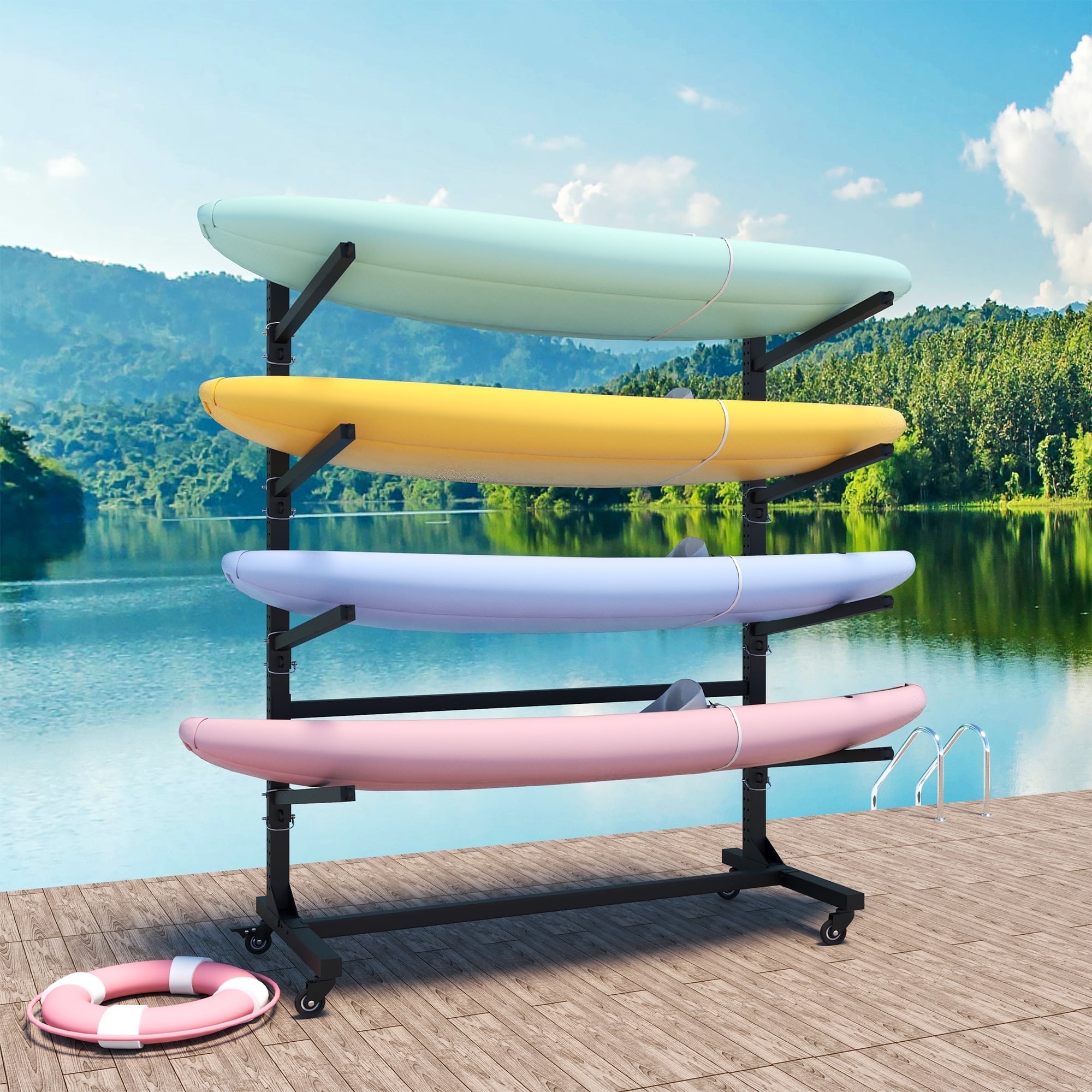
Credit: www.walmart.com
Frequently Asked Questions
What Is The Best Position To Store A Kayak?
Store a kayak on its side or upside down on padded racks. This prevents warping and maintains its shape. Ensure it’s in a shaded, dry area to protect from UV damage. Avoid storing it flat on the ground to prevent hull distortion.
Proper storage extends the kayak’s lifespan.
How To Store Kayaks When Not In Use?
Store kayaks indoors or outdoors using wall racks or stands. Cover them with a tarp to protect from weather. Keep them off the ground to prevent damage. Secure them to prevent theft. Regularly check for any signs of wear or damage.
Ensure proper ventilation to avoid mold growth.
How Do You Store Kayaks Standing Up?
Store kayaks upright by securing them with straps or wall-mounted racks. Ensure they are balanced and stable. Avoid placing them directly on the ground to prevent damage. Protect kayaks from direct sunlight to prevent fading. Using padded stands can minimize scratches and dents.
How To Hang A Kayak Vertically On A Wall?
Install sturdy wall brackets. Position them at the kayak’s midpoint for balance. Secure the kayak vertically, bow facing up. Ensure brackets are tightly anchored for safety. Verify kayak weight capacity and wall strength.
Conclusion
Storing your kayak vertically saves space and keeps it safe. Use wall mounts or sturdy racks to hold it securely. Ensure the weight is evenly distributed to prevent damage. Protect your kayak from sunlight and moisture for longevity. Regular checks ensure your kayak remains in top condition.
Proper storage means a ready-to-use kayak for your next adventure. Remember, a well-stored kayak is a happy kayak. Now, you know how to store your kayak vertically with ease. Enjoy your paddling!