
Picture this: you’ve just bought a kayak and you’re itching to hit the water. The excitement is real, but there’s one small challenge standing in your way—getting that kayak from your driveway to your favorite paddling spot.
Enter the trusty roof rack. But how do you safely strap your kayak onto it without turning your ride into a potential disaster on wheels? You might feel a mix of excitement and anxiety, wondering if your kayak will stay put during the drive.
No worries, you’re not alone. Many kayak enthusiasts share this concern. That’s why learning the proper technique for strapping your kayak onto a roof rack is essential. Not only does it ensure your kayak’s safety, but it also gives you peace of mind as you hit the road. In this guide, you’ll discover simple, foolproof steps to secure your kayak confidently. Whether you’re a newbie or a seasoned paddler, mastering this skill will make your adventures smoother and more enjoyable. So keep reading, and soon enough, you’ll be strapping that kayak like a pro!

Credit: www.facebook.com
Choosing The Right Roof Rack
Choosing the right roof rack for your kayak is crucial for a safe and secure journey. Not all roof racks are created equal, and selecting the proper one can make loading and unloading your kayak a breeze. Let’s dive into the essential aspects of roof racks, focusing on the types available and ensuring compatibility with your vehicle.
Types Of Roof Racks
Roof racks come in various types, each suited for different needs and preferences. The most common types include crossbars, J-cradles, and stackers. Crossbars provide a versatile base for attaching different kayak carriers, making them a popular choice for multi-purpose use.
J-cradles hold your kayak at an angle, maximizing space on your roof and allowing room for additional gear. Stackers are perfect for transporting multiple kayaks, as they allow you to stack them side by side. Consider your specific needs and how often you’ll be carrying multiple kayaks to choose the right type.
Compatibility With Your Vehicle
Ensuring your roof rack is compatible with your vehicle is essential for a secure fit. Start by checking your vehicle’s roof type—whether it has raised rails, flush rails, or a bare roof. This will determine the kind of roof rack you need.
Measure the width of your vehicle’s roof to ensure the rack will fit properly. Some racks are adjustable, but you want to avoid any overhang that could be hazardous. Always refer to the manufacturer’s guidelines for both your vehicle and the roof rack to confirm compatibility.
Have you ever struggled with a mismatched roof rack, wasting precious time on a sunny day meant for paddling? Share your experiences in the comments and help fellow enthusiasts make informed choices. Your insights could make someone’s next adventure much smoother!
Preparing The Kayak And Roof Rack
Secure your kayak by placing it on the roof rack, ensuring it’s centered. Use straps to tie it down tightly, passing them over the kayak and under the rack. Double-check the tightness to prevent movement during transport.
Preparing the Kayak and Roof Rack Transporting your kayak safely begins with proper preparation. Before you hit the road, it’s essential to ensure both your kayak and roof rack are ready for the journey. This not only protects your equipment but also ensures a smooth trip. Ready to dive into the essentials? Let’s start by inspecting your kayak and cleaning that roof rack.Inspecting The Kayak
First, examine your kayak for any damage. Look for cracks or dents that might worsen during transport. Pay special attention to the hull and edges. These areas are most vulnerable during loading and unloading. Consider this: a small crack unnoticed now could lead to major headaches later. Wouldn’t you rather fix it before it becomes a problem?Cleaning The Roof Rack
A clean roof rack is crucial for a secure fit. Dust and debris can interfere with the straps and buckles, making them less effective. Use a damp cloth to wipe down the bars and any attachment points. This simple step can prevent slipping during transit. Imagine driving on the highway and hearing the unsettling sound of shifting equipment. A clean rack helps prevent such scenarios, giving you peace of mind.Positioning The Kayak
Position the kayak centrally on the roof rack to ensure balance. Align the kayak’s cockpit with the vehicle’s roof for stability.
Positioning a kayak on a roof rack requires precision and care. Proper positioning ensures safety during transport. This process involves a few crucial steps.Balancing The Weight
Ensure the kayak is centered on the roof rack. This balance prevents the vehicle from tipping. A well-balanced kayak reduces air resistance and saves fuel.Aligning The Kayak
Align the kayak with the vehicle’s centerline. Proper alignment reduces wind noise and drag. It also enhances vehicle stability. Adjust the kayak so it sits evenly on the rack. Make sure it doesn’t tilt to one side. A well-aligned kayak protects both the kayak and the vehicle.Securing Straps And Tie-downs
Place the kayak on the roof rack carefully, ensuring balance. Use securing straps and tie-downs to fasten it tightly. Check that the kayak is stable before driving.
Securing your kayak on a roof rack is important for safety. Using the right straps and tie-downs makes the process easier and safer. Let’s explore the different types of straps and learn how to place them properly.Types Of Straps
Choosing the right straps is key. Cam buckle straps are popular. They are easy to use and adjust. Ratchet straps are also an option. They offer a tighter hold but can damage if overtightened. Bungee cords are not recommended. They are not secure enough for a kayak.Proper Strap Placement
Placing the straps correctly ensures safety. Start by placing straps over the kayak. Ensure they are centered and evenly spaced. Loop the straps under the roof rack bars. Pull them tight but not too tight. Secure the buckles or ratchets. Make sure there is no slack. You may add a twist to the strap. This prevents noise during travel. Always double-check the tightness before driving.Double-checking Stability
Ensure the kayak is centered on the roof rack. Secure straps tightly to prevent shifting during transport. Double-check stability by shaking the kayak gently.
Double-checking the stability of your kayak is essential before hitting the road. Ensuring your kayak is secure prevents accidents and damage. Let’s explore two simple tests to confirm your kayak is strapped tightly.Tightness Test
Check the straps for firmness. Pull on each strap to see if it shifts. The straps should feel snug and firm. If they move, tighten them further. Loose straps can cause your kayak to wobble. Use a ladder to reach the roof easily. Make sure each strap is flat, not twisted. Twisted straps may come loose during travel.Shake Test
Once the straps are tight, perform a shake test. Grab the kayak and shake it gently. The kayak should not slide or move. If it does, adjust the straps again. Repeat the test until the kayak stays put. This test ensures the kayak is secure for transport. A stable kayak means a safe journey.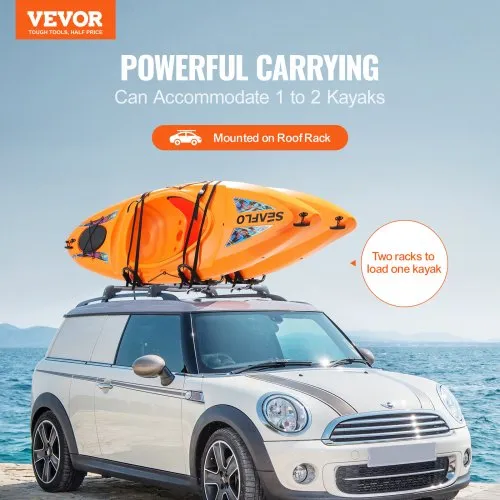
Credit: www.vevor.com
Safety Considerations
Strapping a kayak on a roof rack requires careful attention to safety. Ensuring your kayak is secure can prevent accidents. This section will cover driving precautions and weather impact. Both are crucial for safe transportation.
Driving Precautions
Secure the kayak tightly. Loose straps can lead to accidents. Check the straps before each drive. Avoid sudden stops or sharp turns. These can shift the kayak dangerously. Drive slower than usual. The added weight affects car balance. Regularly check your mirrors. Ensure the kayak stays secure.
Weather Impact
Weather changes can affect strap security. Rain can loosen straps. Check them during wet conditions. Wind impacts stability. Strong gusts can shift the kayak. Adjust driving speed in windy weather. Cold temperatures make straps brittle. Inspect them for wear and tear. Always prepare for sudden weather changes.
Troubleshooting Common Issues
Strapping a kayak onto a roof rack might seem straightforward, but anyone who’s done it knows that even the simplest tasks can come with hiccups. Whether you’re a newbie or a seasoned paddler, you might encounter some common issues along the way. Tackling these problems head-on ensures your kayak stays secure and your journey remains smooth. Let’s dive into some troubleshooting tips that might save you time and frustration.
Loose Straps
Loose straps can quickly become a headache. They not only threaten the security of your kayak but can also cause annoying flapping noises during your drive. Double-check the tension of your straps. After securing your kayak, give each strap a firm tug. If it feels slack, adjust accordingly.
A personal tip is to use ratchet straps for added security. These allow you to tighten more easily and ensure a snug fit. Have you ever stopped mid-trip just to tighten a strap? Avoid this inconvenience by investing in quality straps.
Consider marking the points where straps should be tightened to on the first few uses. This visual guide can save you time in the future.
Kayak Shift
One of the most unnerving feelings is realizing your kayak has shifted during your drive. This can happen if the kayak isn’t centered properly or if the straps aren’t evenly applied. Always start by centering the kayak on the rack. A centered kayak is less likely to move.
When applying straps, ensure they’re applied symmetrically. Uneven straps can cause your kayak to tilt or wobble. A trick is to check alignment from both ends of your vehicle. This ensures that your kayak remains stable throughout the journey.
Think about the surface you’re strapping to. Some roof racks offer friction pads which can reduce movement. If your rack doesn’t have them, consider adding non-slip pads or rubberized grips.

Credit: www.ascentforums.com
Frequently Asked Questions
How To Properly Strap A Kayak To A Roof Rack?
Place the kayak upside down on the roof rack. Use cam straps to secure it tightly. Loop straps under the crossbars and over the kayak. Tighten the straps without damaging the kayak. Check for movement before driving.
How Fast Can You Drive With A Kayak On The Roof?
Drive at or below speed limits with a kayak on the roof. Securely fasten the kayak before traveling. Keep speeds under 65 mph to ensure safety and stability. Regularly check straps during long trips to avoid accidents. Adjust speed for weather and road conditions.
What Type Of Roof Rack Do I Need For A Kayak?
Choose a roof rack designed for kayaks, ensuring compatibility with your vehicle’s roof type. Look for features like adjustable saddles and tie-down straps for secure transport. Verify weight capacity and ease of installation. Popular options include J-style and saddle-style racks.
Ensure the rack fits your kayak’s dimensions.
How To Use Tie Down Straps On A Roof Rack?
Secure the load on the roof rack using tie down straps. Position the straps over the load evenly. Attach strap hooks to the rack’s anchor points. Tighten by pulling the strap’s free end until secure. Ensure straps are tight, but not overly stretched.
Double-check all connections before driving.
Conclusion
Strapping a kayak on a roof rack can be simple. Follow the steps carefully for a secure fit. Always check straps for tightness before driving. Safety is key when transporting your kayak. Practice makes perfect, so try it a few times.
A well-secured kayak ensures a smooth journey. Remember, taking your time pays off. Enjoy your adventure on the water. With patience and practice, you’ll strap like a pro. Stay safe and have fun exploring new waters. Your kayak awaits new adventures!