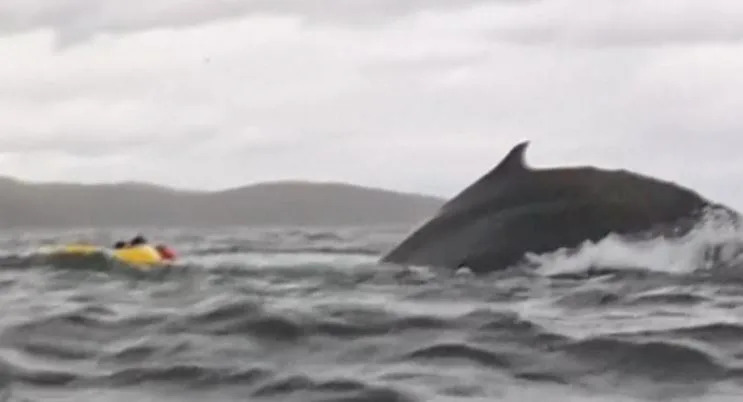
Imagine being out on the open water, paddling peacefully in your kayak, when suddenly, you find yourself in the jaws of a massive creature. Sounds like something straight out of a movie, right?
But this isn’t fiction; it’s a real-life event that has left many curious about what kind of whale could swallow a kayaker whole. You’re about to dive into a story that will captivate your imagination and reveal fascinating facts about these gentle giants of the sea.
Whether you’re a thrill-seeker or just someone who loves nature’s mysteries, this tale is bound to keep you on the edge of your seat. Get ready to uncover the truth behind this incredible encounter—because knowing more about the ocean’s inhabitants might just change the way you see the world.
The Incident
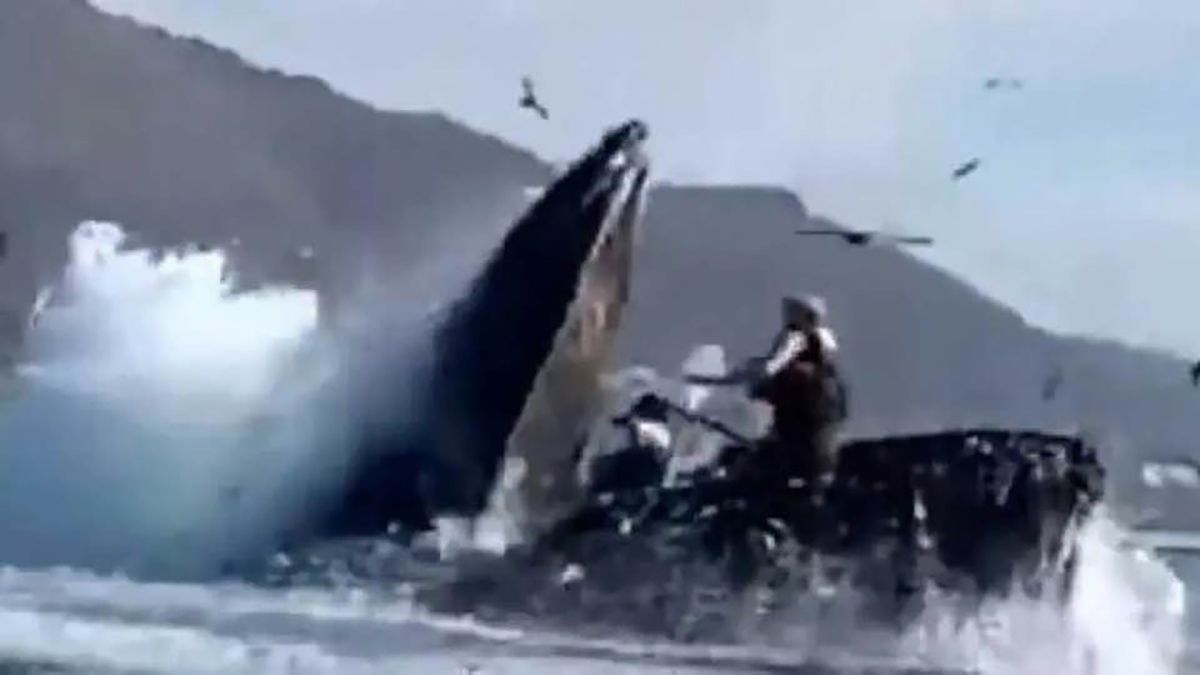
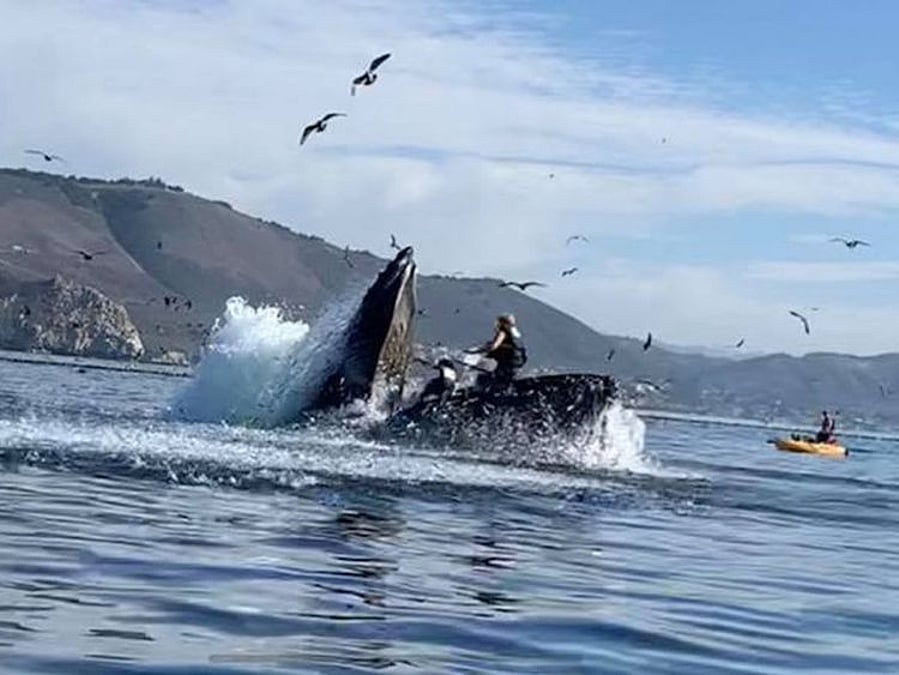
Imagine enjoying a peaceful day on the water, paddling through gentle waves, only to find yourself face-to-face with one of the ocean’s giants. This is exactly what happened to a kayaker when they were unexpectedly swallowed by a whale. The incident left many astonished and eager to learn more about this incredible encounter.
Kayaker’s Experience
The kayaker was navigating the tranquil seas, feeling the salt-kissed breeze. Suddenly, the calm was shattered as the massive creature emerged. The sensation of being engulfed by a whale is something few can describe. The kayaker recalls the brief moment of darkness and the surreal feel of being inside the whale’s mouth.
What would you have felt in those fleeting seconds? The experience was both terrifying and awe-inspiring, highlighting the sheer power and unpredictability of nature.
Initial Reactions
Witnesses on the shore were stunned as they watched the whale surface. Their gasps and shouts filled the air, a mix of fear and fascination. The kayaker’s friends scrambled, unsure how to react to such an extraordinary event.
Initial fears quickly turned to relief as the whale released the kayaker unharmed. This incident serves as a stark reminder of the delicate balance between humans and marine life. How do such encounters change our understanding of these majestic creatures?
For many, it sparked a newfound respect for the ocean’s inhabitants and an awareness of our role in their habitat. Would you be more cautious next time you venture into the deep blue?
Whale Species Overview
The ocean is home to a fascinating array of whale species, each with its own unique characteristics and behaviors. Understanding these magnificent creatures is crucial for anyone intrigued by the mystery of the sea. While the story of a kayaker swallowed by a whale sounds like a tale from a maritime legend, it’s essential to explore which whale species could potentially be involved in such an encounter.
Common Whale Types
Whales are broadly categorized into two families: baleen and toothed whales. Baleen whales, like the humpback and blue whale, are filter feeders. They have comb-like structures in their mouths that allow them to sift small organisms from the water. Toothed whales, such as orcas and sperm whales, are predators. They use their teeth to catch larger prey.
Each whale type has distinct features. Humpbacks are known for their acrobatic breaches and melodic songs. Blue whales are the giants of the ocean, reaching lengths up to 100 feet. Orcas, often referred to as killer whales, are highly social and intelligent, hunting in coordinated pods.
Feeding Habits
Understanding whale feeding habits gives insight into their interactions with humans. Baleen whales consume vast amounts of krill and plankton, often by lunging through dense swarms. This feeding style makes accidental encounters with kayakers unlikely, but not impossible.
Toothed whales have varied diets. Orcas might feed on seals or fish, using strategic hunting methods. Sperm whales dive deep into the ocean to hunt squid. These whales have more controlled feeding techniques, reducing the chances of swallowing large objects accidentally.
Could a whale truly swallow a kayaker? Consider the size and feeding style of the whale. What precautions should you take if kayaking in whale territory? These questions make us ponder the delicate balance between adventure and safety in our encounters with the ocean’s giants.
Investigating The Whale
Investigating the Whale delves into the mysterious incident of a kayaker swallowed by a whale. Discover which type of whale was involved in this unusual encounter. Explore the fascinating world of these gentle giants and their unexpected interactions with humans.
Investigating the Whale What kind of whale could swallow a kayaker? This question piques curiosity and invites a deeper look into the mystery. By examining various angles, we can piece together the puzzle of this intriguing event.Eyewitness Accounts
Eyewitness accounts play a crucial role in understanding what truly happened. People who were present during the incident often have unique perspectives. Their descriptions of the whale’s size, color, and behavior provide valuable clues. Imagine standing on the shore and witnessing this event unfold. What details would you notice? Such firsthand observations are essential for identifying the whale species involved.Environmental Factors
The environment where the incident occurred also offers critical insights. Whales are known to inhabit specific regions based on water temperature and food availability. Consider the time of year and location. These factors can help narrow down the type of whale likely to be in that area. Understanding the local marine ecosystem is vital. It helps determine which species are prevalent and their potential interactions with humans. Have you ever thought about how such environmental conditions might influence whale behavior? This perspective can reveal much about the mysterious encounter.
Credit: www.npr.org
Potential Suspects
In the curious case of a kayaker allegedly swallowed by a whale, many wonder about the potential suspects. Whales are fascinating and diverse creatures. Each species has unique traits. When speculating about the type of whale involved, several candidates emerge. Let’s explore some of the potential suspects.
Humpback Whales
Humpback whales are known for their acrobatics and huge size. They can reach up to 60 feet in length. These gentle giants are not aggressive towards humans. They have large mouths, though. This makes them a popular suspect. Humpbacks often feed near the surface. They lunge through schools of fish or krill. This feeding style could lead to accidental encounters.
Sperm Whales
Sperm whales are the largest toothed predators on earth. They can grow over 50 feet long. Unlike humpbacks, they dive deep for prey. They hunt squid in the ocean’s depths. Though massive, they rarely interact with humans at the surface. Their feeding habits make them unlikely culprits. Yet, their sheer size is worth considering.
Other Possibilities
Other whale species could also be suspects. Blue whales are the largest animals on the planet. Yet, they mainly consume tiny krill. Their feeding strategy doesn’t align with swallowing larger objects. Orcas, or killer whales, are smaller but intelligent. They are known for curiosity. They might approach kayaks but seldom cause harm. Gray whales, known for coastal migrations, could also be considered. Their feeding involves scooping sediment, making them less likely suspects.
Scientific Analysis
Understanding what kind of whale swallowed the kayaker involves scientific analysis. Marine experts use various methods to study these events. They focus on behavior, anatomy, and environment. This helps identify the whale species involved. Such analysis provides insights into whale-human interactions.
Marine Biologists’ Insights
Marine biologists study whale behavior and biology closely. They examine feeding habits to determine the culprit. Whales feed in different ways. Some use filter-feeding, while others hunt. By analyzing feeding patterns, scientists identify the likely species. They also consider the whale’s size and location. This narrows down possibilities.
Marine biologists gather data from past incidents. They use this to understand how whales interact with humans. This data helps predict future encounters. Scientists also study whale anatomy. A whale’s mouth structure can indicate its feeding style. This aids in identifying the species involved in such incidents.
Comparison Of Whale Behaviors
Different whale species exhibit unique behaviors. Baleen whales are filter feeders. They often feed on small fish and plankton. This involves opening their mouths wide. Such behavior might lead to accidental swallowing of large objects.
Toothed whales, like orcas, have different feeding habits. They hunt and catch their prey. Their encounters with humans are usually less accidental. By comparing these behaviors, scientists can determine the likely species involved. Environmental factors also play a role. Whales in certain areas may behave differently due to their habitat.
Understanding these behaviors aids in preventing future incidents. It also helps in developing guidelines for safe human-whale interactions. Scientists continue to study these gentle giants to ensure coexistence.
Credit: www.snopes.com
Impact On Kayaking Community
The unexpected incident of a kayaker being swallowed by a whale has sent ripples through the kayaking community. It has not only startled enthusiasts but also raised significant questions about safety. As the story unfolds, it becomes crucial to explore its impact, ensuring that the spirit of kayaking remains adventurous yet secure.
Safety Concerns
With the whale incident making headlines, many kayakers are now rethinking the safety of their sport. Encountering a whale might seem like a rare occurrence, but it highlights the unpredictability of nature. This raises questions about how prepared you feel when venturing out on the water. Are you aware of the possible risks? Do you have a plan if something unexpected happens?
Preventive Measures
To address these concerns, the kayaking community is actively discussing preventive measures. It’s essential to know your surroundings and be informed about local marine life. Consider investing in safety equipment, like whistles or waterproof communication devices. These tools can prove invaluable if you find yourself in a sticky situation.
Additionally, joining a kayaking group or club can offer support and shared knowledge. Experienced kayakers often share tips and techniques that can enhance your safety. Why not take advantage of their wisdom? By learning from others, you can gain confidence and skills to better handle the unpredictable waters. Remember, safety is not just about equipment; it’s also about being informed and prepared for the journey ahead.
Public Reactions
The shocking news of a kayaker being swallowed by a whale has sent ripples across the globe. While such events are rare, the public’s reaction has been nothing short of fascinating. People are captivated by the mystery of the whale and the incredible survival story. This incident has sparked conversations, debates, and a frenzy of media and social media activity.
Media Coverage
News outlets quickly jumped on the story, providing extensive coverage. Headlines ranged from the dramatic to the sensational, capturing the public’s imagination. Television interviews with the kayaker offered firsthand accounts, making viewers feel part of the thrilling experience.
Experts were invited to discuss whale behavior, adding depth to the narrative. This incident provided an opportunity for educational segments, helping audiences understand the nuances of marine life. Did you find the media’s approach informative or sensational?
Social Media Buzz
Social media platforms were flooded with reactions, memes, and debates. Users shared videos, speculated about the type of whale, and expressed amazement at the kayaker’s escape. Trending hashtags emerged, uniting global audiences in digital conversations.
Some users shared personal stories of close encounters with marine life, adding a personal touch to the discourse. Community groups formed to discuss whale conservation, inspired by the incident. How do you think social media shapes public perception in such events?
Credit: gulfnews.com
Lessons Learned
Encountering a whale while kayaking can be a breathtaking experience. Yet, it raises crucial safety questions. A recent event where a whale swallowed a kayaker offers insights. These lessons can improve both understanding and safety measures.
Understanding Whale Behavior
Whales are generally gentle giants. They rarely pose a threat to humans. Their actions can seem unpredictable. Understanding their behavior is key. Whales surface for air and may not see small boats. Loud noises or sudden movements can startle them. Knowing their feeding patterns helps. It reduces close encounters.
Improving Safety Protocols
Kayakers should follow safety guidelines strictly. Always maintain a safe distance from whales. Stay calm if a whale approaches. Wear life jackets for added safety. Kayakers should learn how to read the ocean. This includes understanding tide and weather changes. Carrying safety equipment like whistles or flares is wise. Regular communication with coast guards enhances safety. Safety protocols can save lives.
Frequently Asked Questions
What Happened To The Kayaker That Was Swallowed By A Whale?
A kayaker was briefly engulfed by a whale while kayaking. The whale accidentally scooped him up during feeding. Luckily, the kayaker was unharmed and soon released. This rare event highlights the unpredictability of wildlife encounters. The incident was captured on video, attracting widespread attention online.
Why Did The Humpback Whale Swallow The Kayaker?
The humpback whale swallowed the kayaker accidentally during a feeding event. Whales gulp large amounts of water and food. Mistaking kayakers for prey sometimes happens due to their massive size and feeding technique. These incidents are rare and not intentional.
Whales usually release anything not meant for consumption.
What Kind Of Whale Swallowed Michael Packard?
Michael Packard was swallowed by a humpback whale. This rare incident occurred while Packard was diving for lobsters. Humpback whales are known for their gentle nature and large size. Such encounters between humans and whales are extremely uncommon and usually accidental.
What Kind Of Whale Ate Jonah In The Bible?
The Bible doesn’t specify the whale’s species that swallowed Jonah. It simply refers to a “great fish. ” Many believe it was likely a whale, but the exact type remains unknown. This story is found in the Book of Jonah, highlighting divine intervention and redemption.
Conclusion
Unraveling the mystery of the whale and the kayaker fascinates many. These sea giants inspire awe and curiosity. Kayakers must stay aware in whale-populated waters. Safety and respect are key when adventuring near them. Knowing more about whales helps us understand and appreciate them.
Their size and beauty captivate our imagination. They remind us of nature’s wonders and the importance of marine life. Always cherish the ocean’s majesty and its inhabitants. Remember, learning about them enriches our experiences. So, next time you paddle out, think of the great whales nearby.
Stay safe and enjoy the adventure!