Are you tired of tripping over your kayak every time you step into your garage? Imagine walking into a clean, organized space where everything has its place.
Hanging your kayak in the garage is not only a smart storage solution but also a way to protect your investment. You might wonder, “How do I even start? ” Or “Will my kayak be safe hanging on the wall?
” These are common concerns, and you’re not alone in wanting answers. By the end of this article, you’ll feel confident in your ability to hang your kayak securely and enjoy the newfound space it creates. Let’s dive into the simple steps that will transform your garage and keep your kayak safe and sound.
Choosing The Right Spot
Finding the perfect spot in your garage for a kayak requires some thought. The right location ensures your kayak is safe and easy to access. Consider a spot that balances space, accessibility, and safety from obstacles.
Consider Space And Accessibility
Measure your garage to find the available space. Ensure there is enough room for both the kayak and other items. The spot should allow easy access for lifting and removing the kayak. Choose a location near the entrance if possible. This makes it simpler to move the kayak in and out.
Avoiding Potential Obstacles
Check for any potential obstacles in the garage. Look for pipes, wires, or shelves that might get in the way. Avoid spots near windows or fragile items. Ensure the kayak doesn’t block light fixtures or doors. Keep the area clutter-free to prevent accidents. A clear spot keeps your kayak safe and secure.

Credit: www.amazon.ca
Selecting Appropriate Hardware
Selecting appropriate hardware is crucial for hanging a kayak in the garage. Choose sturdy hooks and straps designed for kayak weight. Ensure secure installation into wall studs or ceiling beams for safety.
Selecting the right hardware to hang your kayak in the garage is crucial for ensuring its safety and longevity. Choosing suitable hooks and straps can make the difference between a kayak that stays securely in place and one that ends up damaged. Plus, understanding weight capacity considerations can prevent potential mishaps and maintain your kayak in pristine condition. Let’s dive into the key aspects you need to consider.Types Of Hooks And Straps
When it comes to hooks, you have several options, but not all are created equal. J-hooks are popular because they provide a secure hold and are easy to install. Their unique shape cradles the kayak, minimizing pressure points. S-hooks, on the other hand, are versatile and allow for quick adjustments. If you’re looking for something more specialized, consider pulley systems; they make lifting and lowering your kayak a breeze, especially if you’re short on space. Straps are equally important. Ratcheting straps offer the advantage of adjustable tension. This means you can tighten or loosen them according to the kayak’s needs, ensuring a snug fit without over-tightening. Webbing straps are durable and can be cut to length, providing flexibility in installation. They distribute weight evenly, reducing the risk of damage.Weight Capacity Considerations
Understanding the weight capacity of your hardware is essential. Every hook and strap comes with a weight limit; exceeding it can lead to disastrous results. Before purchasing, check your kayak’s weight and ensure the hardware can handle it comfortably. A good rule of thumb is to opt for hardware that supports at least 25% more than your kayak’s weight. This provides a buffer in case of unexpected movements or additional gear. Consider the material of the hardware as well. Steel hooks are robust but can rust over time, whereas aluminum offers a lighter yet durable alternative. Straps should be made from high-quality polyester or nylon for maximum strength and longevity. Have you ever had an unexpected hardware failure? It can be a wake-up call about the importance of understanding weight limits. Don’t let it happen to you—choose wisely and ensure your kayak remains safely suspended.Preparing The Kayak
Hanging a kayak in the garage saves space and keeps it safe. Use sturdy hooks or a pulley system. Make sure to secure the kayak evenly to prevent damage or falling.
Preparing your kayak for storage in the garage is a crucial step to ensure its longevity and functionality. Taking the time to properly prepare your kayak can prevent damage and make it easier to access when you’re ready to hit the water again. It’s more than just stowing it away; it’s about giving your kayak the care it deserves.Cleaning And Inspecting
Before storing your kayak, give it a thorough cleaning. Dirt, sand, and salt can degrade the material over time. Use mild soap and water to clean the hull and cockpit, ensuring you rinse thoroughly to remove any residue. Once cleaned, inspect your kayak for any signs of damage. Check for cracks, deep scratches, or any areas that might need repair. Addressing these issues now can save you from bigger problems later.Safety Precautions
Safety should be a priority when preparing to hang your kayak. Ensure the lifting and hanging equipment is secure and can support the kayak’s weight. Double-check that straps and hooks are durable and properly installed. Consider wearing gloves to protect your hands from sharp edges or unexpected splinters. Also, make sure the area around your kayak is clear to prevent tripping hazards. Have you thought about what might happen if something goes wrong? Being cautious now can prevent accidents.Installation Process
Securely hang a kayak in your garage using sturdy straps and hooks. Measure and mark the wall for alignment. Install the hooks and hang the kayak carefully, ensuring stability and safety.
Installing your kayak in the garage can be a simple and rewarding project. It not only frees up valuable floor space but also keeps your kayak safe and ready for your next adventure. The installation process involves a few key steps that ensure your kayak is securely hung and easily accessible.Marking Drill Points
Begin by identifying the best location for your kayak. Look for a spot that provides enough clearance from walls and vehicles. Once you’ve found the perfect spot, use a measuring tape to mark where the drill points will go. Consider the length and width of your kayak to determine the spacing of the drill points. Use a pencil or marker to mark these points clearly. Double-check your measurements to avoid any mishaps later.Securing Hardware
With your drill points marked, it’s time to secure the hardware. Choose sturdy hooks or a pulley system that can support the weight of your kayak. Drill into the marked points and install the hardware. Ensure everything is tightly secured to prevent any accidents. Test the setup by gently applying pressure to the hooks or pulleys to check their stability. This step gives you peace of mind knowing your kayak is safely hanging. Hanging your kayak in the garage doesn’t have to be daunting. What creative solutions have you found for maximizing space in your garage?Hanging The Kayak
Efficiently hanging a kayak in the garage saves space. Securely install wall mounts or ceiling racks. Ensure the kayak is evenly balanced to prevent damage and increase accessibility.
Hanging a kayak in the garage saves space. It keeps the kayak safe from damage. Proper hanging requires some planning and attention. This ensures the kayak remains in good condition.Positioning Correctly
Choose a spot away from the garage door. This prevents the kayak from blocking the entrance. Make sure there’s enough wall space. It should be longer than the kayak. Measure the kayak’s length and height. Check the ceiling height too. This helps in finding the right position. Install brackets or hooks on the wall. Use strong materials for safety. The kayak should be parallel to the floor. This helps with balance. Leave enough space for other items. This avoids clutter and makes access easy.Balancing Weight
Balance is key when hanging a kayak. Ensure the weight is evenly distributed. Use two brackets or hooks. Place them at equal distances. This prevents the kayak from tilting. Check the kayak’s weight before installing. Use sturdy hooks that can support the weight. Double-check the installation. Make sure the kayak is stable. Avoid placing heavy items on top of it. This keeps the kayak safe and secure.Ensuring Stability
Hanging a kayak in the garage requires ensuring stability. It’s crucial to prevent accidental falls and damage. Stability starts with choosing the right hardware and a solid mounting surface. Use brackets or straps designed for kayaks. This will distribute weight evenly and minimize stress on the kayak.
Checking Secure Fit
Ensure the kayak fits snugly in its holder. Adjust straps or brackets to avoid movement. A loose fit can lead to falls or damage. Test the fit by gently shaking the kayak. It should remain steady without wobbling. Consider adding padding to the holder for extra grip.
Regular Maintenance
Inspect the mounting hardware regularly. Check for rust or wear. Tighten loose bolts and replace worn straps. This ensures ongoing stability. Over time, hardware can weaken, compromising safety. Regular checks help maintain a safe storage environment.
Additional Storage Solutions
Finding space for a kayak in the garage can be challenging. Additional storage solutions help maximize space efficiently. Understanding different storage options ensures a safe and organized environment. Proper storage prevents damage and maintains the kayak’s condition.
Vertical Vs. Horizontal Hanging
Vertical hanging saves floor space. It lets you store the kayak upright. This method is ideal for small garages. Horizontal hanging keeps the kayak parallel to the ground. It requires more wall space but provides easy access. Both methods protect the kayak from scratches.
Utilizing Wall Racks
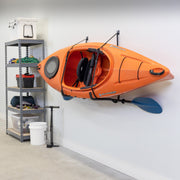
Wall racks offer a sturdy support system. They secure the kayak against the wall. Easy installation makes them a popular choice. Wall racks come in various designs. Adjustable racks accommodate different kayak sizes. They keep the kayak elevated, freeing up floor space.

Credit: storeyourboard.com

Credit: us.amazon.com
Frequently Asked Questions
How Do I Hang My Kayak In My Garage?
Use wall-mounted racks or ceiling hoists to hang your kayak securely in the garage. Ensure proper weight distribution.
Is It Better To Store A Kayak Vertically Or Horizontally?
Store kayaks horizontally to prevent warping and damage. Use padded supports to distribute weight evenly. Vertical storage can stress the hull, risking distortion. Ensure proper ventilation and protection from direct sunlight for longevity. Regularly inspect for signs of wear. Proper storage extends kayak lifespan and maintains performance.
How To Hang Kayaks On A Wall?
Use wall-mounted kayak racks to hang kayaks securely. Ensure studs are present for stability. Position the racks at shoulder height. Attach racks with appropriate screws and anchors. Place kayaks horizontally or vertically as per available space. Ensure kayaks are balanced and secure before letting go.
How To Attach A Kayak Without A Roof Rack?
Use foam blocks or inflatable racks to secure the kayak. Tie down with ratchet straps through the car doors. Ensure stability by checking straps frequently. Avoid high speeds for safety. Protect the car roof with towels or mats to prevent scratches.
Conclusion
Hanging your kayak in the garage saves space. It also keeps it safe. Follow these steps to hang it securely. Measure the space and choose the right spot. Use sturdy hooks and strong straps. Always double-check everything for safety. Hanging your kayak makes it easy to access.
No more tripping over it on the floor. Plus, it looks neat and tidy. With these tips, your garage stays organized. Your kayak will be ready for the next adventure. Keep your garage tidy and your kayak protected. Enjoy your clutter-free space!