
Are you excited to hit the water but unsure how to transport your kayak? Loading a kayak into a truck bed can seem tricky, but it doesn’t have to be.
Imagine the ease and freedom of knowing exactly how to secure your kayak, ensuring it arrives safely at your favorite water spot. In this guide, we’ll reveal simple, effective techniques that make the process a breeze. You’ll discover insider tips that not only protect your kayak but also optimize your truck space.
By the end of this article, you’ll feel confident and ready to get your kayak on the road, making your next adventure as smooth and enjoyable as possible. Keep reading, and unlock the secrets to hassle-free kayak transportation!

Credit: www.facebook.com
Preparing The Truck Bed
Ensure the truck bed is clean and free of debris. Use padding or blankets to protect the kayak. Position the kayak securely with straps to prevent movement during transit.
Preparing the truck bed is a crucial step when you’re planning to transport your kayak safely. Without proper preparation, you risk damaging both your vehicle and the kayak. Let’s dive into the essentials for getting your truck bed ready for this adventure.Clearing The Space
Begin by removing any loose items from the truck bed. They can become projectiles or get damaged during transit. It’s also a good time to check for any sharp objects that might scratch your kayak. Think about the last time you transported gear in your truck. Did you forget about that toolbox lying around? Avoid such surprises by giving your truck bed a quick sweep or vacuum. This ensures a clean and clear space for your kayak.Inspecting The Bed Liner
A well-maintained bed liner protects both your truck and kayak. Examine it for any cracks or tears. These could expose your truck bed to scratches or rust over time. If your bed liner is damaged, consider patching it up or using a temporary mat. Adding this extra layer can prevent potential damage during loading and unloading. Remember, a little maintenance now can save you from costly repairs later. By focusing on these simple steps, you set the foundation for a smooth and safe transport. Are there any other preparations you personally swear by when getting ready for a kayaking trip?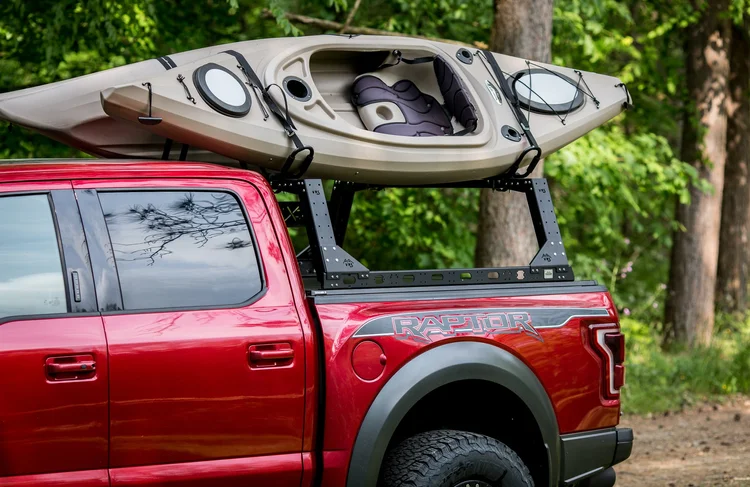
Credit: www.kbvoodoo.com
Securing The Kayak
Putting a kayak in a truck bed requires careful positioning and securing. Place the kayak diagonally to fit better. Use straps or ropes to tie it down firmly, ensuring it won’t shift during transport.
Securing the kayak in your truck bed is crucial for safe transport. An unsecured kayak can shift or fall, posing risks. Properly securing it keeps both your kayak and vehicle safe.Using Tie-down Straps
Tie-down straps are essential for securing kayaks. Choose durable, weather-resistant straps. Loop them over the kayak, ensuring firm tension. Attach the straps to the truck’s anchor points. Check the straps for tightness, but avoid over-tightening. Too tight can damage the kayak. Ensure even distribution of pressure.Positioning The Kayak
Correct positioning prevents shifting during transport. Place the kayak in the center of the truck bed. The weight should be balanced. Align the kayak parallel to the truck sides. Ensure the kayak is not hanging off the truck bed. This prevents drag and potential damage. Proper alignment is key to safety.Loading Techniques
Loading a kayak onto a truck bed can be tricky. Follow these simple techniques to make the process smooth and easy. Ensuring your kayak is securely loaded will protect it during transit.
Lifting The Kayak
Start by standing on the side of the kayak. Bend your knees and grab the kayak’s edge. Use your legs to lift, not your back. This reduces injury risk. If the kayak is heavy, ask for help. Two people can lift it more easily. Balance is key. Ensure even weight distribution while lifting.
Placing In The Bed
Once lifted, approach the truck bed. Slide the kayak in gently. The kayak’s bow should face the cab. Ensure the kayak is centered and straight. This prevents movement during travel. Use tie-downs to secure it. Fasten straps tightly to avoid shifting. Check the kayak’s stability by shaking it lightly. Adjust if necessary.
Safety Measures
Loading a kayak into a truck bed requires careful attention to safety. Following safety measures ensures your kayak and truck remain undamaged. It also protects you and others on the road. Below are key safety steps to consider.
Checking Stability
Before driving, ensure the kayak is stable in the truck bed. Place it evenly and secure it with straps or bungee cords. The kayak should not shift during transport. If it moves, it could damage the truck or fall out.
Test stability by gently shaking the kayak. If it wobbles, adjust the straps. Use non-slip mats for extra grip. The kayak should stay put, even on bumpy roads.
Ensuring Visibility
Make sure the kayak does not block your rearview visibility. It should not extend too far beyond the truck bed. If it does, use a red flag or reflector. This alerts other drivers to the extended load.
Check mirrors for a clear view before driving. Adjust them if necessary to avoid blind spots. Safe visibility helps prevent accidents and keeps you aware of your surroundings.
Additional Tips
Secure the kayak with sturdy straps to prevent it from shifting during transport. Place a red flag on the kayak’s end for visibility.
Putting a kayak in a truck bed requires careful planning. This ensures safety and prevents damage. Here are some extra tips to make the process smoother.Using A Kayak Rack
A kayak rack helps secure your kayak. It keeps the kayak stable during transport. Choose a rack that fits your truck bed. Some racks are adjustable for different kayak sizes. They should be easy to install and remove. Look for racks made of durable materials. This ensures longevity and stability. Check if the rack has padding. Padding protects the kayak from scratches. Ensure the rack is tightly fastened. A loose rack can lead to accidents. Regularly inspect the rack for wear and tear. Replace any damaged parts immediately.Preventing Damage
Preventing damage is crucial. Use padding or foam blocks. These cushion the kayak during transport. Secure the kayak with straps. Straps should be tight but not overly tight. Loose straps can lead to movement. Overly tight straps may damage the kayak. Inspect the straps for any signs of wear. Replace worn straps promptly. Check the truck bed for sharp objects. These can scratch or puncture the kayak. Clean the bed before loading the kayak. A clean surface reduces the risk of damage. Consider using a bed liner. A liner provides extra protection for your kayak.
Credit: www.coloradofans.com
Frequently Asked Questions
How Far Can A Kayak Hang Out Of A Truck Bed?
A kayak can hang out up to 4 feet beyond the rear of a truck bed. Ensure it’s securely fastened to prevent accidents. Check local laws, as regulations might vary. Using a red flag or light on the kayak’s end increases visibility for safety.
What Is The Easiest Way To Transport A Kayak?
Use a roof rack on your vehicle to transport a kayak easily. Secure it with straps tightly. Consider a kayak trailer for multiple kayaks or if roof racks aren’t suitable. Inflatable or folding kayaks fit inside most cars, offering a convenient alternative.
Always ensure safety during transport.
Should Kayaks Be Transported Up Or Down?
Transport kayaks with the hull facing up to prevent deformation. Secure them using straps to ensure safe travel.
How To Strap Things Down In A Truck Bed?
Use ratchet straps for secure fastening. Place heavier items at the bottom for stability. Distribute weight evenly to prevent shifting. Anchor straps to truck bed tie-downs. Tighten straps firmly but avoid over-tightening to prevent damage. Double-check security before driving.
Conclusion
Transporting a kayak in your truck bed is easy with these steps. Start by securing the kayak properly to prevent movement. Use straps or ropes to hold it in place. Position the kayak with the hull facing down for stability.
Use a truck bed extender if needed for extra support. Always double-check the tightness of the straps before driving. Ensure nothing is hanging out dangerously. This method helps you carry your kayak safely and efficiently. Enjoy your kayaking adventures without hassle.
Keep these tips in mind for a smooth journey every time. Safe travels and happy paddling!